

Paragliding Cross-Country Competition: Rules & Course Setting

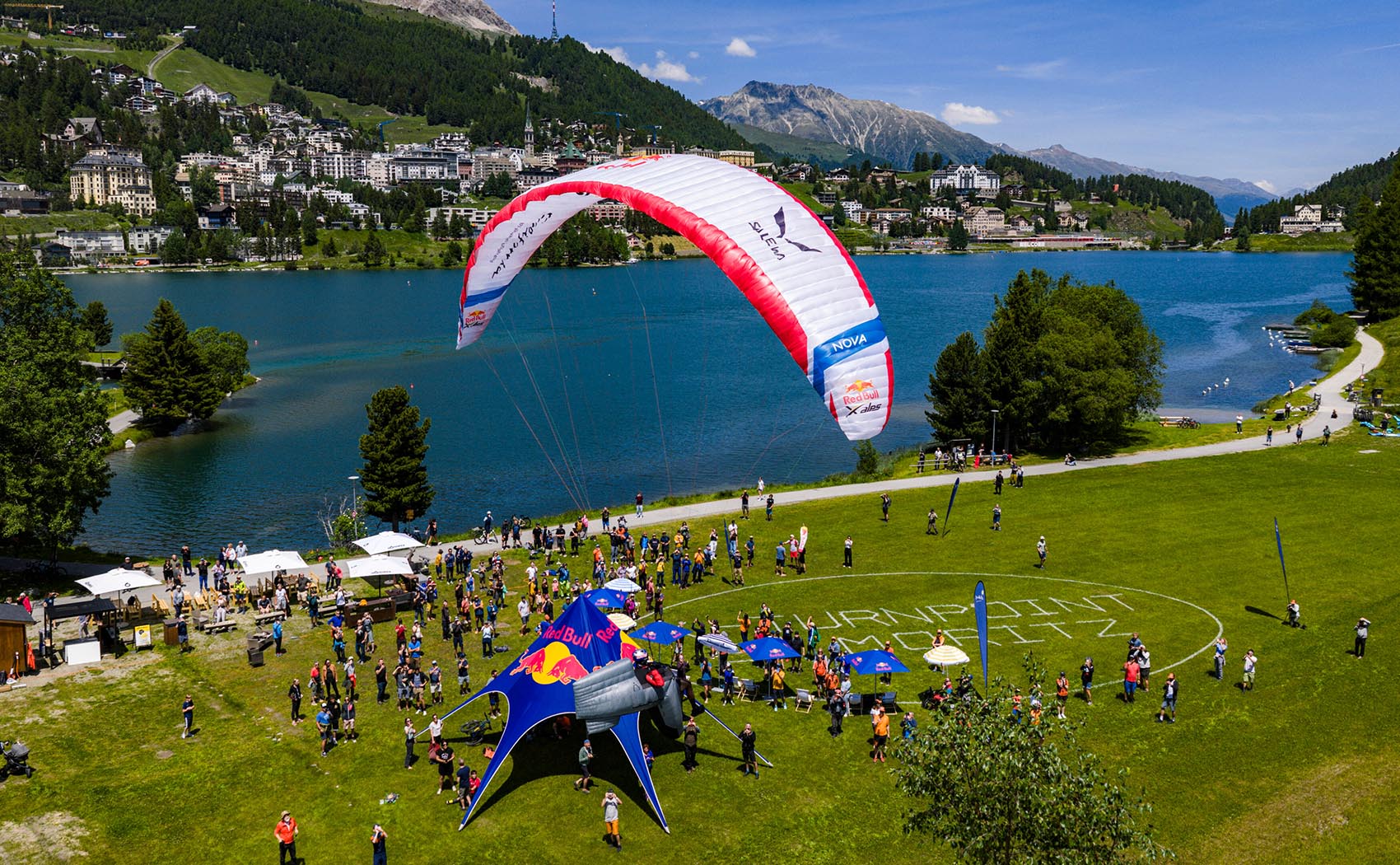
Paragliding cross-country racing is a dynamic and strategic sport where pilots navigate a predetermined course in the sky, using thermal lift to gain altitude and glide as efficiently as possible to reach turn points and the goal. The winner is typically the pilot who completes the course in the fastest time or gains the most points based on distance and speed.
I. Key Competition Rules and Formats
Several formats exist, but most major competitions use rules based on those defined by the FAI (Fédération Aéronautique Internationale).
- Main Competition Formats:
· Race to Goal: This is the most common format. A course is set, and the first pilot to cross the goal line wins. Points are awarded based on the finishing order and speed. If no one reaches goal, points are awarded for distance flown.
· Elapsed Time (Race): The clock starts for all pilots at the same moment (a “mass start” or after a “start gate” opens). The pilot with the fastest total time from start to goal wins.
· In-Time (Speed): In this format, the clock starts for each pilot individually when they cross the starting line and stops when they cross the goal line. This rewards pure flying speed, regardless of when they started.
· Open Distance: Less of a “race” and more of a “fly as far as you can” task. The pilot who covers the greatest straight-line (or declared) distance from takeoff wins.
- The Task & Basic Rules:
A “task” is set each day, defining the course and rules for that day’s competition.
· Start Procedure:
· A Start Gate is defined in the air, often a cylinder or a line.
· A Start Time is announced (e.g., the gate “opens” at 1:30 PM). Pilots must enter the start gate after this time for their flight to be valid.
· Multiple Start Gates: Sometimes, several start times are offered (e.g., 1:30, 1:45, 2:00). This allows pilots to choose the best time based on changing weather conditions. Your race time is calculated from your chosen start time.
· Turn Points (TPs):
· Pilots must navigate through a sequence of turn points, which are virtual points or cylinders in the sky defined by GPS coordinates.
· Cylinder Type: The most common method. A waypoint has a radius (e.g., 400m, 1km). A pilot must simply fly within this cylinder to have “turned” the point. The track log will show the point being “tagged.”
· FAI Type: The pilot must fly across a line extending from the waypoint in a specific direction.
· Goal:
· The finish is typically a Goal Line or a Goal Cylinder. Crossing this line or entering the cylinder ends the pilot’s task time.
· A Goal Height may sometimes be set, requiring pilots to be below a certain altitude when they cross the line.
· Safety Rules:
· Airspace: Strictly prohibited. Flying into restricted airspace (e.g., near airports, military zones) leads to immediate disqualification.
· Collision Avoidance: Pilots must give right of way to the pilot below and to the pilot on the right in a thermal.
· Landing: Pilots must obey local landing rules and avoid landing in dangerous or prohibited areas (e.g., highways, private property).
· Reserve Parachute: Mandatory for all competitions.
· Proof of Flight:
· Every pilot carries a GPS flight instrument (often a Flymaster, XCTrack, or similar) that logs the entire flight track.
· After landing, pilots “download” their track log (IGC file) to official scoring staff. This file is used to verify that the pilot correctly followed the course, stayed in airspace, and accurately recorded their start and finish times.
· Scoring:
· Scoring is complex and software-based (e.g., SeeYou or FS). Points are awarded for:
· Distance: How much of the course was completed.
· Speed: How fast you flew relative to others.
· Leadout Points: Bonus points for pilots who start early and lead the pack.
· The system normalizes scores each day so the day’s winner gets 1000 points, and others get a percentage of that, allowing for fair ranking over multiple competition days.
II. How to Set a Competition Course (Task Setting)
Setting a good task is an art that balances challenge, safety, and achievability. A task committee (experienced pilots and organizers) analyzes conditions to set the day’s task.
- Pre-Flight Analysis:
· Weather Forecast: This is the most critical factor. The committee studies:
· Thermal Strength & Timing: How strong will the thermals be? When will they start and die?
· Wind Speed and Direction: A headwind makes legs longer; a tailwind makes them shorter. Crosswinds can make legs dangerous or impossible.
· Cloudbase: This determines the maximum height pilots can climb to, affecting glide range.
· Possible Overdevelopment: Risk of thunderstorms will lead to a shorter, more conservative task.
· Terrain Analysis: Using maps and local knowledge, they assess:
· Landing Zones: Are there ample safe landing areas along the route? A task should not force pilots over long stretches of unlandable forest or water.
· Lift Sources: Does the route pass over known thermal triggers (e.g., sun-facing slopes, towns, fields)?
· Airspace & Restricted Zones: The course must be designed to avoid all controlled airspace.
- Designing the Course:
· Task Type: The committee decides the format (Race to Goal, etc.).
· Route Selection:
· Triangle: The classic XC course (Start -> TP1 -> TP2 -> Goal). Efficient and tests multiple wind angles.
· Out-and-Return: Start -> TP1 -> Goal (back at or near start).
· Dog-Leg / FAI Triangle: A specific triangle shape that qualifies for FAI distance records.
· The route is chosen to utilize the wind (e.g., a headwind on the first leg, a tailwind on the final glide to goal).
· Defining Turnpoints:
· Turnpoints are placed on distinct geographical features (a hilltop, a lake corner, a village) to make them easy to identify from the air.
· The radius of turnpoint cylinders is set. A smaller radius (e.g., 400m) makes the task more technically demanding.
· Setting Distances:
· The total distance is estimated based on weather forecasts. A good task is achievable by the top pilots, but challenging enough to separate the field. It might be 50km on a weak day or 120km on a strong day.
- Briefing and Validation:
· Pilot Briefing: Before takeoff, the task is presented to all pilots. They receive the coordinates of the Start, all Turn Points, and Goal, which they input into their GPS instruments.
· Flexibility: Modern competitions often have a “AAT” (Assigned Area Task) format. Instead of fixed turnpoints, pilots are given large cylinders or sectors to fly to. They can choose their own path within these areas, and their score is based on their total distance flown within a set time. This is used when the weather is uncertain to ensure a fair task for all.
In summary, paragliding racing is a complex blend of physical skill, mental strategy, and meteorological understanding. The rules ensure fair and safe competition, while the course setting is a strategic process aimed at creating the most rewarding flying challenge possible given the day’s conditions.