AirDesign Vivo 2 and LiVi Review EN-B

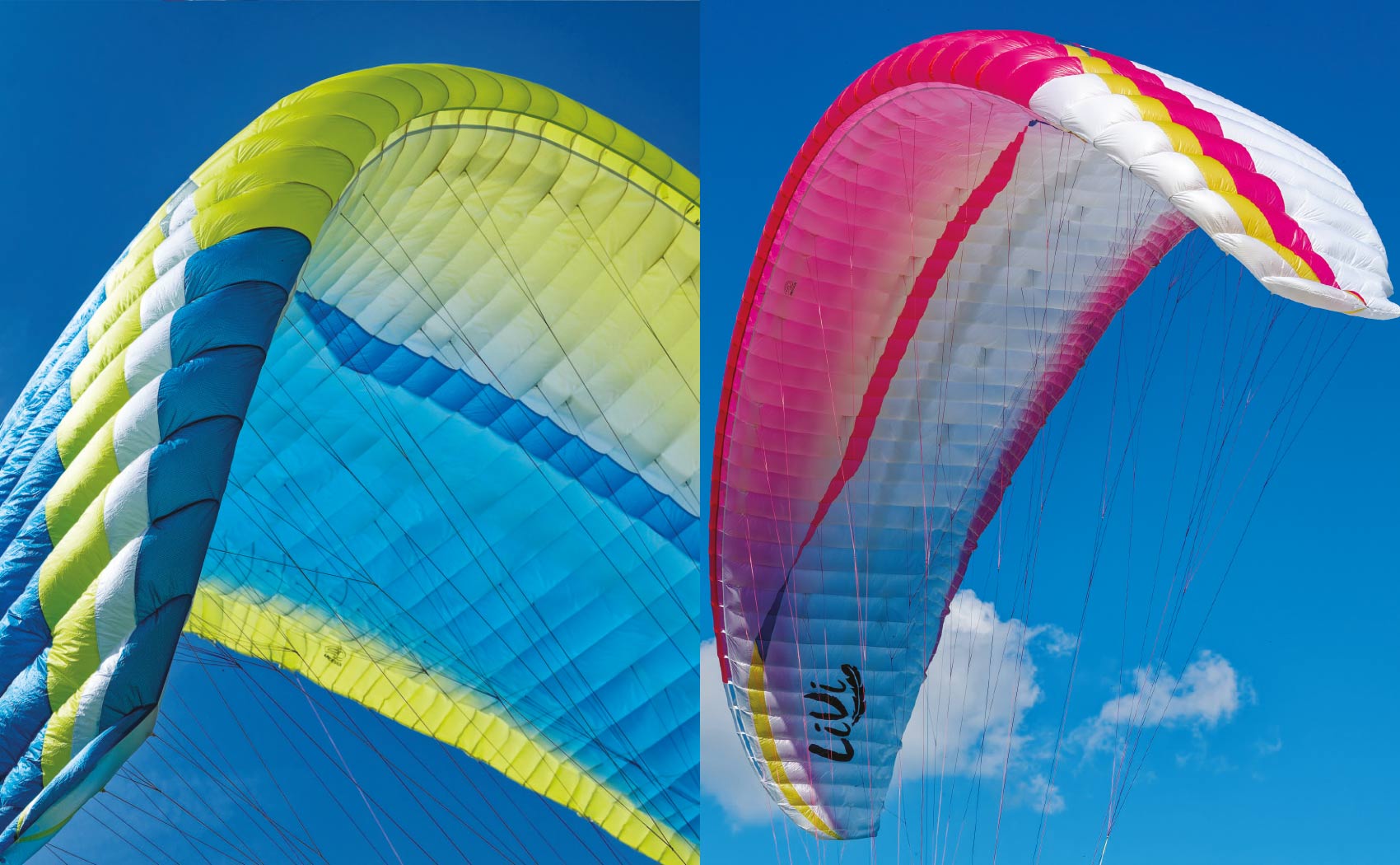
AirDesign-Vivo-2Bastienne Wentzel flies this new mid-B and its lightweight brother back-to-back,
AirDesign’s Vivo 2 is a mid-B glider aimed squarely at intermediate pilots. It’s an all-rounder, designed to help pilots develop the confidence and skills to thermal and fly cross country. Launched at the start of the 2023 season it comes four years after the original Vivo, which appeared in 2019.

At the same time as announcing the updated Vivo 2, AirDesign also announced the LiVi – the Lightweight-Vivo. This glider is aimed at the same level of pilot but is also obviously skewed towards the hike-and-fly crowd or pilots looking to save weight for expeditions or travel.
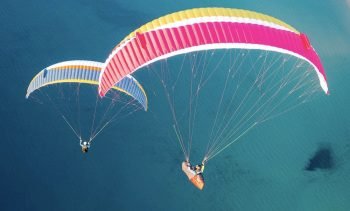
Flying the Vivo 2 and its light sibling at the same time was a great opportunity to make a direct comparison between a standard wing and the exact same one in a lightweight version. Both are pitched as easy B gliders and the aerofoil design is identical. The differences are mainly in lighter fabric, the use of unsheathed lines and nitinol instead of plastic rods in the nose. What then does that mean for the pilot?
Unboxing
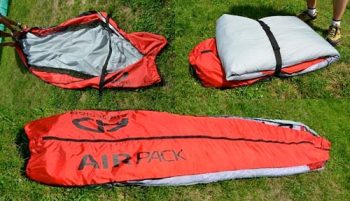
It’s easy to guess which of the identical AirDesign 50/50 concertina-bags contains which glider. The one with the LiVi in it is notably lighter – almost a kilo in the S size. And as we found out later it also fits comfortably in the bag, whereas packing the Vivo 2 this small requires quite a bit of stuffing.
The small pack size of the LiVi is a result of the fabric used: Dominico 10DSF (25g/m²) instead of 20D and Skytex 27 (which is 29g/m² double coated) on the Vivo 2. Remarkably, the LiVi has patches of strong fabric on the nose to protect the thin fabric from abrasion, which I imagine adds a bit of weight back on.
It’s a reminder that there is always a pay-off when going for a lightweight glider – those lightweight materials need to be taken care of. If you don’t yet have the skills to manage your glider perfectly on launch or landing every time, then go for a glider made of more robust materials until you do – your wing will last longer.

Photos: Bastienne Wentzel
Differences
The Vivo 2 has fully sheathed lines, the LiVi unsheathed but coloured. Sorting either one was no problem.
The gliders have different brake toggles: the ones on the LiVi have a bit less padding and no swivels because, AirDesign say, these would damage the rings that the brake line runs through. Both the LiVi and Vivo 2 I flew had pulleys for the brake line. I could not decide which handles I preferred. They were both very comfortable and worked with all kinds of grip.I was surprised to find identical 12mm webbing riser sets on both wings, notably both with a B/C-control system including a wooden bar. Wouldn’t the lightweight version justify leaving such a complicated system out, especially for an entry-level EN-B?
AirDesign say it gives newer pilots the chance to familiarise themselves with controlling the glider with the rear risers, even if it is only to use in an emergency – when the brake line snaps for example. It also means pilots can get used to rear-riser control before moving to a higher-end glider and can use the glider for longer during their progression. Designer Stephen Stiegler insisted on a proper B/C system which pulls the B-riser down as well, not just C’s, because the latter will still just deform the canopy.

The last difference between the two wings is seen in the reinforcements in the nose: the Vivo 2 has the trademark curved plastic rods whereas the LiVi has crossed nitinol, because you can’t curve nitinol like plastic.
It makes the nose of the LiVi slightly more tight and possibly a tad more aggressive, say AirDesign.
First flights
With an aspect ratio of 5.38 and 49 cells, both wings promise easy handling. Indeed, the launch behaviour of the Vivo 2 is textbook in all conditions. It just inflates and sits above your head, either with a backwind or gusty thermals. Groundhandling up to 25km/h I felt that it started to pull a bit and inflation should be a bit more careful or it rises too enthusiastically, but overall the Vivo 2 is very easy. The LiVi felt lighter but it didn’t jump up as some lightweight gliders do. Generally I felt its launch behaviour is almost the same as the Vivo 2.
Thermalling, I found at first that the Vivo 2 needed a bit of convincing to go around. Wing loading makes a difference here: flying the same glider with 5kg more weight gave a nicely agile feeling. And with a determined bit of weightshift the Vivo 2 (and the LiVi) was happy to turn quickly and turned out to be quite a playful glider.
AirDesign say that ‘brakeshifting’ works on these gliders because of the longer pulley connector, but I couldn’t tell the difference in steering with my hand inward or outward. Although the theory of brake-shifting is good – pull the brake in towards the pilot to create a tighter turn, or push the brake out to provide a flatter turn – I think it is debatable how usable this is in practice for intermediate pilots learning to thermal.When the conditions strenghthened I started to appreciate how the Vivo 2 smooths out the bumps. The glider and I just floated around the sky as if on a large swell, which felt really comfortable. In the meantime we managed to climb efficiently but without any stress. Interestingly, the tips rustled once in a while but that didn’t at all detract from the trust it inspired.
The LiVi felt very much the same in similar late summer thermals. It is not chatty at all and flows around the sky smoothly while climbing just fine in comparison with the gliders of all levels around us. Maybe, just maybe, the LiVi is a bit more agile because of the different nose or the kilo less weight, but with my eyes closed I wouldn’t bet on guessing which one is which in flight.