

Electric Winch vs Drone Tow Launch for Paragliding: Which Is Better?

For paragliding pilots who don’t have access to a hillside launch site, understanding your launch options can open up entirely new flying possibilities. Two methods stand out in 2026: the electric winch launch and the emerging drone tow launch. Both get you airborne without needing a mountain — but they work very differently.
paragliding winch
What Is Electric Winch Launch?
Electric winch launch is one of the most established methods for getting aircraft airborne without a runway. An electric winch sits on the ground, connected to the glider or paraglider via a long steel cable — typically 800 to 1,000 metres. When the winch engages, it rapidly reels in the cable, pulling the aircraft forward and upward. Once the pilot reaches a safe altitude, they release the cable and glide freely.
This method has been used in glider clubs across the UK and Europe for decades. The winch itself is powered by an electric motor, making it quieter and more affordable to operate than aircraft tow launches.
What Is Drone Tow Launch?
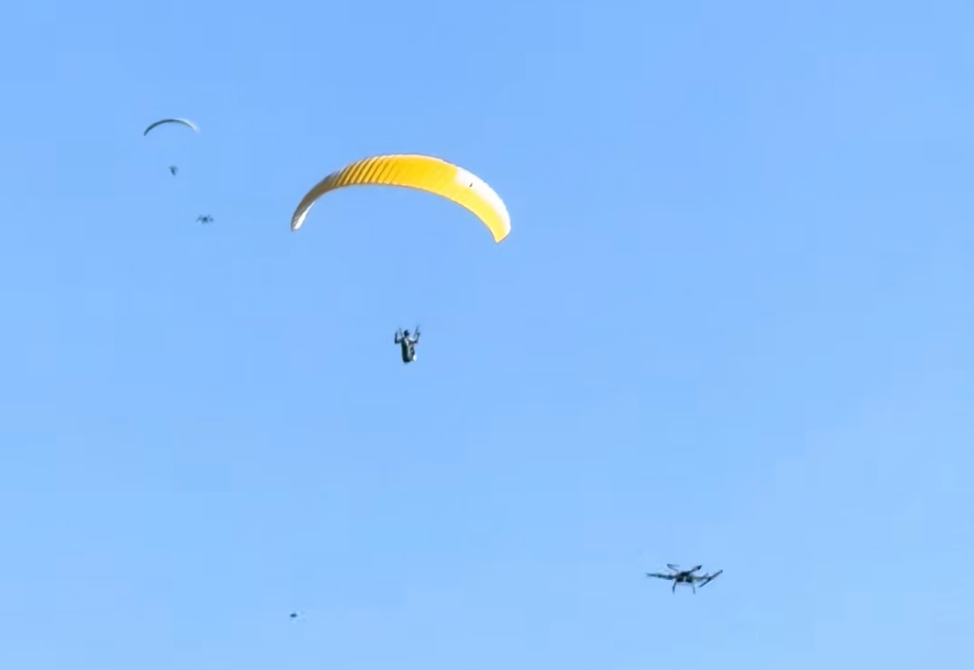
Drone tow launch is a newer technology where a heavy-lift unmanned aerial vehicle (UAV) pulls the paraglider into the air. The drone flies ahead, connected by a tether, and ascends to 300–500 metres before automatically releasing. The paraglider pilot then transitions into free flight under their own wing.
World-leading research, including work by the Shenzhen Research Institute of Northwestern Polytechnical University, has brought this technology from concept to practical reality. In December 2025, drone tow launch was successfully trialed in Conghua, China — proving it works for commercial paragliding experiences.
Electric Winch vs Drone Tow: Head-to-Head Comparison
| Factor | Electric Winch | Drone Tow |
|---|---|---|
| Availability | Well established; widely used at glider clubs | Emerging technology; limited availability |
| Setup Space | Needs a flat area with cable run (500–1,000m) | Requires only 50–100m of open ground |
| Wind Sensitivity | High — must launch into wind direction | Moderate — drone can adjust flight path |
| Operating Cost | Low — electric power only | Higher — drone hardware, batteries, operator |
| Launch Flexibility | Fixed cable direction; limited adjustability | Drone can fly multiple angles and routes |
| Terrain Requirements | Flat open field needed | Small patch of grass or hardstanding is sufficient |
| Noise Level | Moderate (electric motor noise) | Higher (multi-rotor drone propellers) |
| Regulatory Status | Well understood; standard aviation practice | Evolving — subject to UAV regulations |
| Suitable for Beginners | Yes, with instructor supervision | Yes, with qualified operator |
When to Choose Electric Winch
Electric winch launch is the better choice when:
- You have access to a club site with the right cable infrastructure
- You fly regularly and want the lowest cost per flight
- Wind conditions are consistent and suitable
- You prefer a method with decades of proven safety records
When to Choose Drone Tow
Drone tow launch shines when:
- No suitable hillside or long flat ground is available
- You need maximum flexibility in launch direction
- You’re setting up experiences in challenging terrain (mountains, forests, coastal areas)
- Traditional winch infrastructure isn’t available nearby
The Bottom Line
Both electric winch and drone tow launch represent the evolving future of flat-ground paragliding. The electric winch offers a proven, cost-effective solution for pilots with access to the right infrastructure. Drone tow launch is the exciting newcomer — more flexible in where and how you fly, though still building its operational track record.
For schools and instructors looking to expand where they can teach, drone tow technology may be the more transformative option. For clubs with established infrastructure, the electric winch remains a reliable workhorse.
At YOWFLY, we support the full range of paragliding needs — from training harnesses to compact packing solutions that make getting to launch easier. Whatever launch method you choose, the right gear helps you make the most of every flight.